![]() |
|
|||||||
| Welcome to XS650.com! |
| XS650.com is dedicated to the Yamaha XS650 twin motorcycles and to the people who love to ride, restore, and customize them. As a guest you can view the forum and photo galleries, but you have to register before you can post or view attachments. It’s free and only takes a minute. Proceed to registration. (This notice will go away once you log in) |
| The Garage Motorcycle Related Discussion (Yamaha XS650, other makes and models, and anything else motorcycle related including tools and gear) Topics Threads in The Garage can also be viewed by Topic. |
![]() |
|
|
Thread Tools |
|
|
#1 |
|
XSively Addicted
Join Date: Oct 2009
Posts: 2,226
|
Bike wont start?, Running rough?
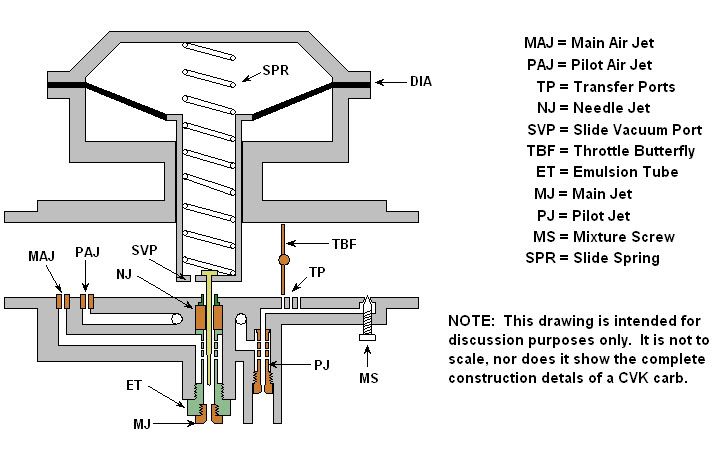
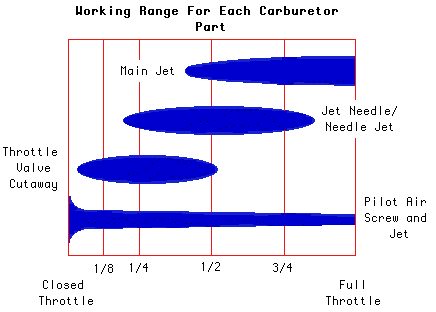
First: What have you just done? What have you changed? Has anything odd or different happened? Any new strange noises? Just bought it? Heard it running? Riden it? Been sitting? - just bought it, well, don’t believe anything the PO has told you, ignore it - already your ride, you will already have a connection with this old girl, listen to your instinct, trust yourself? Ok…consider these anyway… - 3 things all motors require - power, fuel, airnew purchase? been sitting? before you even kick it over… - get a manual - check tank..rusty? empty, clean it properly, including petcocks tank cap-seal and air vent - replace inline filter, if none put one in - check and clean air filter, replace if necessary - drain carbs, if the fuel stinks or smells odd, remove and clean, thoroughly…if it smells normal, you might be lucky, can be worth the chance in the short term but you wont get away with it forever - if your inlet manifolds have vacuum barbs, check the rubber caps for cracks and fit - if carbs are off, check the rubber intake mounts, they get hard and crack, replace with good ethanol resistant ones, don’t forget the boots connecting to the air filters, they get old and brittle too, replace if necessary carb guide - check your throttle and clutch cables, if not teflon lined clean and lubricate, if teflon lined check they slide freely, if not replace - while the lhs side case is off, check the clutch worm drive, don’t lose the ball bearing, clean the worm well, the worm-case can crack and expand when you pull the cable preventing proper operation, pack with grease-don’t forget the ball bearing, don’t reinstall the side-cover yet - do a compression and or leakdown test, see below... - drain the oil, smells of petrol? the carbs have been leaking-floats are holed or not set properly or the float needle seat is compromised or the float needle o-ring is damaged, check and clean the filter screen as well - check the oil, look for pieces of black plastic from the cam chain guide, it will need replacing, also alu pieces, normally cam chain hitting the case, sounds awful, hopefully it hasn’t reached the bearings, large bits may be 5th main gear or 3rd pinion gear dogs, crank bearing cage pieces have been found, also broken clutch primary springs - check the suction-side sump filter, these break- oil filter thread - check the pressure-side side filter, it can be washed, I prefer to change it - fill with oil - get help, bike on main stand, rotate rear wheel while going through the gears, 1 at a time, gives a feel for possible gearbox problemsfreaking yet?...dont worry, be happy…its all cheap insurance and helps you get to know your new friend, look after her and she’ll return the favour - ready to go?..uh uh…not yet matecold set before running do a cold set.. . - is your battery charged - rotate engine counterclockwise to tension cam chain, adjust the tensioner so its flush, lock the backing nut...recheck when hot - remove the lhs side-cover, bike out of gear, remove a plug, if you have a TDC finder….install it, if not, a plastic straw or knitting needle will do-put it in the hole so you can feel where the piston is, rotate the flywheel ccw, 17mm socket-for control-feeling for TDC, you will probably need to go round several times to get the feel, if you go over don’t rotate back, go around 1 more time so the tension is on the back of the chain - now set the tappets, remove covers, rotate crank feeling for the top of the compression stroke, where both tappets are loose on the cam - set tappets - model...inlet...exhaust...XS1-B.....0.003"(0.076mm)...0.006"(0.15mm)...XS2-650..0.006"(0.15mm)....0.012"(0.30mm)...XSB........0.0024"(0.06mm)...0.004"(0.10mm)...XSC-on...0.0024"(0.06mm)...0.006"(0.15mm) - rotate for the compression stroke on the other side and set those tappets too - install new plugs, gapped, N7Y champion or BP7ES ngk ... 0.027-0.031" (0.7-0.8mm) - if you have points, check the advance mechanism, pull the rod, clean and lubricate it, check the weights, make sure they move freely and arent loose, check the springs-the weights should snap back fully, if not shorten the springs-even better replace… video atu - static set the points…key on, use a small 12v bulb, key off, use an ohm meter, first one set of points, then the other - set them at the highest point of the points cam lobe 0.012-0.016" (0.30-0.40mm) against the points rubbing block - rotate crank counterclockwise, the light or meter will show when the points open…keep in the same field of vision, next to the timing marks, easier observation, allows you to get the timing almost spot-on, recheck when running with a timing light…for greatest dwell angle set for smallest gap possible…advance with larger gaps, retard with smaller gaps - time the rh cylinder-upper points set by rotating the complete backing plate - time the lh cylinder-lower points set by moving the half plate only - points opening before ‘F’ are advanced-opening early - points opening after ‘F’ are retarded-opening late - timed, motor running, BTDC 15° @ 1200rpmstill wont start? - flat battery - this is not necessarily the carbs, its easy to waste time on them when youre really chasing an electrical problem, check for spark by rotating for closed points, open them manually-you should see the spark, a good one should be blue and about 6mm - no spark…condenser, replace…dirty electrical connections...kill switch, coils, plug-cap-lead, TCI - burnt points...condensor - kicking back...atu - weak spark…coil, leads, plug caps - intermittent spark…broken power feed to points, check behind the points plate…coil, test when hot...broken solder connections in the TCI, resolder…dirty electrical connections, check them, clean, use dielectric grease to seal them-1 at a timeignition problems - fuses, kill switch, batt terminals, ignition switch, dirty connections - worn, burnt or pitted points - worn points rubbing block - points plate off centre or not seating correctly - worn points cam - broken points wires - points or atu cover seals leaking - condenser kaputt - coil kaputt - TCI kaputt, TCI pickup kaputt - side stand relay-if fitted - atu return springs too long or weak - atu shaft not lubed or worn bearing surfaces - atu shaft pin broken-shouldn’t rotate more than 40°- a very interesting site for TCI ignitions , covers this way better than i ever could only now should you contemplate looking at your carbs, this is the second to last step, the last being synchronisation - as far as the carb is concerned there are 4 main operating functions that affect fuel delivery at various stages... ...0-100% throttle...pilot air screw/jet , 6-50%...slide cutaway, 20-85%...needle jet/jet needle, 33-100%...main jet ![]() - most problems stem from blocked primary circuits, thus affect your idling, your bike wont idle when these are blocked - fuel must come out the 3 tiny holes in the throat...use a small guitar string bent in an L to gently probe the 3 holes as you spray - cover the other holes with your fingers to increase spray pressure...when spray comes out the 3 holes they are clear ![]() - set the mixture screws...see the table at the end of the carb guide p 27 ...hat-tip weekendrider - set each side at operating temps for light-black/grey 1/3 the way up the electrode - set each side mix screw independently for plug color...rhs runs 25 degrees hotter, requires more fuel...these carb readings are worth the effort, esp this for the CV carbs and this for VM34-36 ... read and reread until youre dreaming the stuff ...go here for dell'orto carbs ...this isnt finished...carb syncing to follow...feel free to rip this to pieces, neither complete nor perfect...so, at it - fix it for me...i will be interested to see what you think ive done wrong |
|
Last edited by inxs; 07-18-2010 at 12:17 PM.
fear is temporary, regret is forever
|
|
|
|
|
|
|
#2 |
|
XSively Addicted
Join Date: Oct 2009
Posts: 2,226
|
compression test
... ![]() i love forums, you cant get away with forgetting anything...'Just a small point, I think many have been caught out in the past with vacuum carbs.......Do a comp test with throttle wide open, but don't realise their slides are still closed!' ...hat-tip yamaman ...this is completely true, unlike VM and TM mikunis, CV carb slides are not directly controlled by your throttle but by the flow of air through them and the corresponding vacuum...try pegging them open-dont lose the peg into the motor-or even better remove them-good chance to check the mounts and membrane ![]() - compression tests will tell you if your engine has good compression...an engine is essentially a self-powered air pump, and needs good compression to run efficiently, cleanly and for easy starting - in general, most engines should have 140 to 160 lbs. cranking compression with no more than 10% difference between the cylinders - low compression in one cylinder usually indicates a bad exhaust valve - low compression in two adjacent cylinders usually means a blown head gasket - low compression in all cylinders indicates worn rings and cylinders - engine needs to be overhauled - check compression manually with a gauge - all the spark plugs must be removed - disable the coil or ground the high tension lead - electronic ignition, disabl the coils to prevent them from firing - hold the throttle open - crank the engine for a few seconds holding a compression gauge in a spark plug hole - note the maximum compression reading, repeat the process for the other cylinder - compare the individual cylinder readings to see if the results are within specifications, 10% difference is ok...150lbs is great, under 100 is marginal...be aware that xsive carbon build up will distort readings upwardsrings or valves - squirt a little 30 weight motor oil into the cylinder through the spark plug hole and repeating the compression test - the oil temporarily seals the rings - if compression readings are higher the second time around, it means the rings and/or cylinder is worn - no change in the compression readings would tell you the cylinder has a bad valveleakdown or cylinder leakage test ![]() - similar to a compression test...indicates how well your engine's cylinders are sealing - instead of measuring pressure, it measures pressure loss - requires the removal of all the spark plugs - rotate crankshaft so that each piston is at top dead center (both valves closed) when each cylinder is tested - a threaded coupling attached to a leakage gauge is screwed into a spark plug hole - compressed air (80 to 90 psi) is then fed into the cylinder - an engine in great condition should generally show only 5 to 10% leakage - an engine still in pretty good condition may show up to 20% leakage - more than 30% leakage indicates trouble - the neat thing about a leakage test (as opposed to a compression test) is that it's faster and easier to figure out where the pressure is going - if you hear air coming out of the tailpipe, it indicates a leaky exhaust valve - air coming out of the throttle body or carburetor would point to a leaky intake valve - air coming out of the breather vent or PCV valve fitting shows worn rings and/or cylinders - a leakage test can also be used with a compression test to diagnose other kinds of problems - a cylinder with poor compression but minimal leakage usually has a valvetrain problem such as a worn cam lobe, broken valve spring, collapsed lifter, bent push rod, etc - if both cylinders have low compression but show minimal leakage, valve timing is probably incorrect-the timing chain may be off a tooth or two - if compression is good and leakage is minimal, but a cylinder is misfiring or shows up weak in a power balance test, it indicates a fuel delivery (carb) or ignition problem (fouled spark plug or bad plug wire etc) |
|
Last edited by inxs; 01-17-2010 at 05:18 AM.
fear is temporary, regret is forever
|
|
|
|
|
|
|
#3 |
|
XSively Addicted
Join Date: Oct 2009
Posts: 2,226
|
how do they work..inductive coils-for points and TCI units
- coils are an electrical transformer containing insulated primary and secondary winding circuits in a ratio of about 1:100-200 wound around a central iron core - the primary circuit, heavier wire, starts at the +ve treminal and ends at the -ve terminal - the secondary circuit, finer wire, sits inside the primary circuit, wrapped around the iron core - 12v is fed to the primary winding creating a large (enhanced by the iron core) magnetic field surrounding the secondary windings - the coil is now storing a large magnetic field - when the +12v to the coil primary winding is turned off, by the points or TCI unit, the magnetic field inside the coil collapses - this causes a "Back EMF" (Electro Motive Force) current in the primary wire of about 100-300volts which is now applied to both windings. When the coil collapses this rapidly changing magnetic field creates current in the secondary windings - the primary-secondary winding ratio, say 1:100, produces a corresponding voltage output increase..if the 'back EMF spike' primary (low tension) wire is about 150v the secondary (high tension) wire is 100 x 150=15,000 volts - the faster the power cutoff is in the primary, the faster the collapse, and the faster (more powerful) the spark is - when the points open (instantly cutting off power to the coil) 15,000 volts goes to ground from the secondary winding via the spark plug - the 'back EMF spike' is why we have condensors - these are actually capacitors, and absorb this spike, created by the magnetic field collapse as the points open and helps shape the coil collapse to produce the high power secondary collapse and slows the coil collapse just long enough for the points to get far enough apart so the 'back EMF' output won't arc across the points and destroy them (sometimes in a matter of seconds) - TCI units have a pickup coil, induced by a magnet placed on the rotor that replace the points...this signal is fed to the control unit and serves to collapse the primary winding induced magnetic field - this is where the discussion arises between crank and cam based ignition systems, with the crank based system bypassing cam chain wear as a source of timing error difference between "Induction" (TCI and points) and CDI systems - TCI collapses an already charged coil by disconnecting it (TCI switches off briefly)...these systems use a higher resistance type coil and are known as an "induction" or "Kettering" ignition systems...when switched on these have a permanant 12V input - CDI sends a brief high (200+) voltage pulse to an uncharged coil which acts like a transformer and multiplies it even higher...the step up is normally around 100:1...these systems tend to use low resistance or "racing" oils. - Do Not Use a "racing" -or- low resistance type coil in an "induction" ignition (points or TCI) system..the low resistance coil will flow more current thru the TCI producing the "Hot Toaster" effect...it will work for awhile, but will eventually burn the points or TCI module out testing an inductive coil - best done at operating temps, this is because metal expands with temp and shorts or breaks are more likely to be discovered - disconnect from the wiring loom, note which wire goes where... - pull plug caps from the plugs - if possible remove coils from the bike - use an ohm meter to test the primary and secondary windings - primary winding, Rx1 range, test across the +ve and -ve terminals, should read 3-5 ohms, zero or infinite readings show a compromised circuit ![]() - secondary winding, Rx100 range, +ve to the coil output, where the plug lead goes, -ve on a primary winding terminal, should read between 6k and 15k ohms, lower or zero readings indicate a defective coil - note that just because the coils test ok, it doesnt mean they are, intermittent defects are common and may not be seen at time of testing, the only failsafe way is to replace with a known good coil testing for spark points models - this can be seen at the points, on points models, doesnt mean that there is spark at the plugs however - remove the plug, reconnect to cap and lead, hold next to the cylinder and kick the motor over, spark should be fat and blue, about 6mm long dual coils - dont remove dual coil plug leads without earthing them to the cylinder…you will damage either the dual coil, the ignition system or both…there is no internal secondary winding earth, a disconnected-unearthed plug will cause the high tension voltage to seek an exit, generally by arcing through the primary winding… normally both plugs are needed to complete the circuit, if one isnt earthed the other wont fire - make a spark tester like shown below non points models failure to observe these will result in system damage - dont turn on unless both spark plugs are connected - dont test for spark with one or both plugs disconnected - dont disconnect battery with engine running - do ensure that the battery cable connections are secure - dont leave the ignition on when engine is not running - make yourself a spark tester ![]() - use the clamp to fix the tester to the cylinder cooling fins where it will be earthed, bending the electrode away will allow you to see the full spark |
|
Last edited by inxs; 01-20-2010 at 03:23 PM.
fear is temporary, regret is forever
|
|
|
|
|
|
|
#4 |
|
XS650 Addict
Join Date: Dec 2009
Posts: 171
|
|
|
|
|
|
|
#5 |
|
XS650 Addict
Join Date: Nov 2009
Location: Herts, UK
Posts: 269
|
The carb guide is like the XS650 owners bible for carbs
![]() Print it out & read it again & again I keep my copy in my bedside drawer ![]()
|
|
|
|
|
|
#6 |
|
XSively Addicted
Join Date: Oct 2009
Posts: 2,226
|
- point taken weekend rider...i was thinking about where i start as per my BS34s
|
|
fear is temporary, regret is forever
|
|
|
|
|
|
|
#7 |
|
XSively Addicted
Join Date: Oct 2009
Posts: 2,226
|
Here is a procedure to test the PAMCO without having to turn the engine over. It is essential that you measure the resistance of your coil because a shorted coil will fry the PAMCO.
1. Use a voltmeter and check for battery voltage on each of the red/white wires with the key and kill switch are turned on. 2. The dual output coil has to have both spark plug wires connected to a spark plug at all times. 3. To test for spark, connect one of the spark plug wires to a spark plug that is grounded to the engine. To test for spark without having to turn the engine over, do this procedure: 1. Remove the PAMCO rotor. 2. Remove the locating pin in the advance rod. 3. Reinstall the rotor, but without the pin. 4. Replace the nut holding the rotor on loosely. This will allow you to spin the rotor to produce a spark without having to turn the engine over. 5. Connect one of the spark plug wires to a spark plug that is grounded to the engine, but not installed in the engine. 6. Make sure that the other spark plug wire is connected to a spark plug in the engine. 7. Turn on the ignition switch and the kill switch. 8. Spin the rotor while looking at the gap in the spark plug for a spark. 9. Turn off the kill switch and the ignition switch. ...by pamcopete |
|
Last edited by inxs; 01-20-2010 at 03:24 PM.
fear is temporary, regret is forever
|
|
|
|
|
|
|
#8 |
|
XSively Addicted
Join Date: Oct 2009
Posts: 2,226
|
Synchronising carbs
- this will tie together all the steps youve already gone through ...cold setting the motor and checking with a stroboscope ...checking for spark ...cleaning and servicing your carb remember – these will make syncing difficult…manifolds have air leaks, bad throttle shaft seals, troublesome dual coil-problems will affect both cylinders, bad spark plug cap or lead, compressions not within 5 to 10 psi - a hotter range plug-NGK BP6ES-will work fine for tuning to compensate for oil fouling - the method will depend on your carbs and coil(s) and exhaust …CV carbs linked…single cable …CV carbs unlinked…separate cables…2:2…2:1 …VM, TM slide carbs…separate cables…2:2…2:1 …vacuum barbs – no barbs …separate coils…dual coil …crossover-balance pipe linked carbs - i like using the "dead cylinder" technique so I will write it up - dont remove dual coil plug leads without earthing them to the cylinder…you will damage either the dual coil, the ignition system or both…there is no internal secondary winding earth, a disconnected-unearthed plug will cause the high tension voltage to seek an exit, generally by arcing through the primary winding… normally both plugs are needed to complete the circuit, if one isnt earthed the other wont fire - if you don’t have vacuum barbs, build yourself one of these to kill cylinders by earthing the lead against the motor…absolutely necessary for dual coils, electronic ignitions and pamco, and good insurance for single coils… ![]() - or do this modification one day when you have the head off...when syncing screw barbs into these holes…holes can be plugged when not in use...hat tip goran persson ![]() - if you do have vacuum barbs, opening them causes a mixture so lean the cylinder will not fire ![]() - set both mixture screws to the factory settings – gives a reference point - start and warm the motor - good idea to use an electric fan to cool the motor - adjust idle to 2,000 rpm - switch petcock to prime if they are vacuum operated – no vacuum no gas - kill the right cylinder by removing the vacuum hose or plug from the barb or earthing lead against the cylinder - adjust left cylinder idle to 1,000 rpm - replace the vacuum hose or plug lead - allow engine to settle - blip the throttle once or twice - remove the left cylinder vacuum hose or earth lead against the cylinder - adjust right cylinder idle to 1000 rpm using the throttle shaft adjustment screw located between the carbs - replace vacuum line or plug lead - running both cylinders, adjust idle for 1,200 rpm using the left cylinder idle adjustment …motor wont run on just one cylinder - increase idle to 2,500 rpm - don’t forget your cooling fan sync polishing - after completing your sync process - for dual exhausts without a crossover…I have a mate who disconnects and blocks his stock balance pipe just to do this…wont work for 2 into 1 systems or if your pipes leak - adjust the right hand carb with the center idle screw so both exhausts sound the same - hear the difference unlinked carbs-non vacuum - 2 parts to syncing unlinked carbs idle sync… - use a 1mm (0.040in) drill bit or long wire as a gauge-I like to use a long wire as it makes cable syncing easier - fit under the slides and adjust the idle speed screw to allow all slides to just rest on their gauge - set the air-fuel mix screws to factory specs and match - start the motor - adjust idle speed screws in or out, half turn at a time, allowing motor to settle each time…set ech screw to the same lift - smooth idling shows correct adjustment - kill the motor cable sync…motor off - adjust cable free play so the slide begins to lift off idle - back off until slide just returns to idle - hold lh slide with your finger and twist the throttle-this is where the long wire comes in handy as you will see whether the slides are opening at the same time - adjust any difference with the cable adjuster - check throttle free play-about 1mm - double check and tighten everything down …you can use vacuum gauges and home made manometers if you want, but I find the above dead cylinder method fine without going to the expense and trouble manometer manometer |
|
Last edited by inxs; 01-20-2010 at 03:27 PM.
fear is temporary, regret is forever
|
|
|
|
|
|
|
#9 |
|
XSively Addicted
Join Date: Oct 2009
Posts: 2,226
|
- running points? pamco?
not starting? popping-backfiring? poor idle and-or low speed performance? poor mid range and high range performance? engine overheating?- these are all possible symptoms of a malfunctioning advance unit-ATU - wtf? you say - this is the link between the cam and the timing, controlling the advance and retard - operation should be smooth - counterweights should visibly and audibly snap back into position - there should be little static movement-the whole plate rotates with the cam and in fact the shaft sits inside the camshaft - check the springs - check freeplay in the weights on the pins - check bush mating surfaces on the shaft - tools required hammer, drift, 2 10mm spanners, scredriver, moly lube for shaft, long nose pliers ![]() - remove the covers from both sides, exposing points on the left and advance on the right...this whole process took about 25 minutes to remove and reinstall - cover ![]() - pamco ![]() - advance ![]() - use 2 10mm ring spanners to loosen the lock nuts ![]() - gently tap shaft out the points side ![]() - like this ![]() - tap the lock-nut free - slide the backing plate out as you undo the nut or it will bind ![]() - remove pin before undoing the 3 screws holding the housing ![]() - to expose the bearing ![]() - when installing make sure the marks line up ![]() - and the notch goes over the pin ![]() - dont forget the pin ![]() - the shaft has a short end and a long end-short to the right-atu, long to the left-points, like this...if youve removed the 2 small pins located in this shaft-make sure theyre both replaced so they line up...not 180° out ![]() - it was cold when i disassembled mine to take these photos ![]() - if using mikesxs shaft be aware that it is a little longer than original...the play can be shimmed but do this from the right hand side..ie the advance side |
|
Last edited by inxs; 01-26-2010 at 04:58 AM.
fear is temporary, regret is forever
|
|
|
|
|
|
|
#10 |
|
XS650 Junkie
Join Date: Oct 2009
Location: Alton, IL
Posts: 934
|
Hey inxs,
Wanna do a brain swap? I just need your brain for like a couple of weeks.. Afterwards, you can have it back. Promise |
|
My Rides
31yo CX500 ![]() 30yo XS650 Special II ![]() 24yo Harley Evo Mutant ![]() 21yo Blonde Cheerleader
|
|
|
|
|
|
|
#11 |
|
Jabroni
Join Date: Feb 2010
Location: Toronto Ontario
Posts: 810
|
INXS, up above you said
- timed, motor running, BTDC 15° @ 1200rpm This is correct up to C's - C's and after (447 type engines, if i'm not mistaken) should be - No Advance timed, motor running, BTDC 10° @ 1200rpm - Full Advance timed, motor running, BTDC 38° @ 2500rpm As an extra FYI (for people who haven't done timing before), an adjustable digital timing light will allow you to set these numbers off of the TDC mark, and let you ignore the "F" range. Just punch in "+10" on the timing light, set the rotor mark to coincide with the "T" mark on the casing. Repeat for other side. Then punch in "+38" on the timing light, and bring the engine speed up to a steady 2500 (handily, most electronic timing lights will have a RPM counter on them) and check that you're in the vicinity of the T mark on the casing. If you're not, try some more throttle (up to 3500 max) and see if you get to it. If not, your advance springs are too tight, and you're not getting full advance out of your engine. If you're seeing no advance, or very little (you *should* be able to watch it move as you increase rpm) your springs are too loose. |
|
'78 XS650 Standard
'72 Triumph Daytona --- If you can't understand it, it is intuitively obvious. |
|
|
|
|
|
|
#12 |
|
XSively Addicted
Join Date: Oct 2009
Posts: 2,226
|
- hi sundie, in part youre right, that not all ignitions are timed the same and i should have stated that at the time, however even the yamaha literature doesnt agree with itself
- for model XSC and above the normal timing given is 15° BTDC@1200rpm full retard 38° BTDC@3500rpm full advance- however you can also find 15° +/- 2° and 40° +/- 2° -the generally given specs for XS1-XSB are 10° BTDC@1200rpm full retard 38° BTDC@3000 and 3500/XSB full advance- however you can also find 15° +/- 2° and 40° +/- 2° |
|
fear is temporary, regret is forever
|
|
|
|
|
|
|
#13 |
|
Jabroni
Join Date: Feb 2010
Location: Toronto Ontario
Posts: 810
|
Hm. The Haynes must have it wrong (or i'm remembering backwards). I'll confirm later.
Is it 3500 for full advance? I didn't think it was that high for some reason. I'm probably doing mine tonight. I'll check.
|
|
'78 XS650 Standard
'72 Triumph Daytona --- If you can't understand it, it is intuitively obvious. |
|
|
|
|
|
|
#14 |
|
Staff Member
Join Date: Aug 2009
Location: River Falls, WI
Posts: 1,612
|
Something else to keep in mind when using certain digital timing lights: http://www.xs650.com/forum/showthread.php?t=31
|
|
Travis
|
|
|
|
|
|
|
#15 | |
|
Jabroni
Join Date: Feb 2010
Location: Toronto Ontario
Posts: 810
|
Quote:
I'll have to remember that when i go to Pamco, since it *does* have adjustment. |
|
|
'78 XS650 Standard
'72 Triumph Daytona --- If you can't understand it, it is intuitively obvious. |
||
|
|
|
![]() |
Similar Threads (based on keywords)
|
||||
| Thread | Thread Starter | Forum | Replies | Last Post |
| clutch wont disengage?? | ryans79 | The Garage | 7 | 09-01-2010 09:58 AM |
| kick start trouble | dayv | The Garage | 21 | 04-15-2010 09:16 AM |
| rough starting point for jetting | Visegrippe | The Garage | 7 | 01-19-2010 08:42 PM |
| Price for a running xs650 | tking308 | The Garage | 17 | 11-18-2009 06:34 AM |
| Tags |
| advance, coils, cold set, compression testing, how to, maintenance |
| Bookmarks |
| Thread Tools | |
|
|